Full Spectrum Saunas - Are They Worth It?
If you've been shopping for an infrared sauna, you've probably come across the term full spectrum. It's a feature offered by several of the higher-end manufacturers, and it's often presented as a major advantage over traditional far infrared saunas.
But what exactly does full spectrum mean, and is it really worth paying more for?
A full spectrum infrared sauna provides three different infrared wavelengths: near, mid and far. Most conventional infrared saunas rely primarily on far infrared, so the addition of the other two wavelengths is what separates full spectrum models.
I've been researching saunas for over 20 years now, and I've seen quite a few new technologies introduced over that time. Some have been worthwhile, while others haven't lived up to the hype.
I think full spectrum is a nice feature to have, particularly on a premium sauna. But is it really worth paying extra for? Let's take a closer look at the technology, the potential benefits and some of the better options available.
What is a Full Spectrum Sauna?
As mentioned, full spectrum refers to three types of infrared wavelengths: near, mid and far.
All three are forms of infrared radiation, which is invisible to the human eye. The difference is in their wavelengths and how they interact with the body.
Here's a basic breakdown:
| Infrared Type | Description |
|---|---|
| Near Infrared (NIR) | Shorter wavelengths also used in certain types of light therapy. |
| Mid Infrared (MIR) | Falls between near and far infrared and contributes to radiant heating. |
| Far Infrared (FIR) | Longer wavelengths used in most conventional infrared saunas. |
If you want a more detailed explanation of the three wavelengths and how they differ, take a look at my Far Infrared vs. Mid vs. Near comparison.
Far infrared is what you'll find in most standard infrared saunas. Carbon and ceramic heaters are commonly used to produce radiant heat, warming your body without requiring the extremely high air temperatures associated with traditional saunas.
Full spectrum models add near and mid infrared wavelengths, either through additional heaters or a combination of heating technologies.
One thing worth pointing out is that not all full spectrum saunas work the same way.
Some provide all three wavelengths together, while others give you more control over which heaters or wavelengths are operating during your session.
That's an important distinction when you're comparing different manufacturers.
What are the Best Full Spectrum Infrared Saunas?
There are quite a few companies advertising full spectrum technology these days, but two that I particularly like are Sunlighten and Clearlight.
Both have been around for many years, both specialize in higher-end infrared saunas, and both offer full spectrum models with their own heating technologies.
They're certainly not inexpensive, but if you're planning to use your sauna regularly for years to come, I think they're worth a serious look.
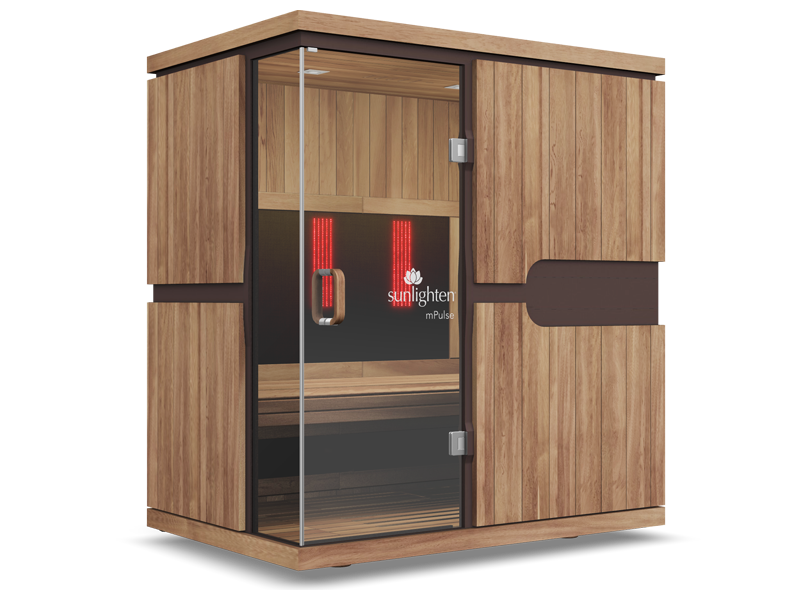
Sunlighten mPulse
Sunlighten has been one of my top infrared sauna manufacturers for a long time, and I actually own an mPulse Conquer, which is a three-person full spectrum model.
The mPulse uses Sunlighten's proprietary heating technology, with near, mid and far infrared that can be adjusted through its control system. The current lineup also incorporates red light technology, adding another feature that sets it apart from more basic infrared saunas.
What I like about my Conquer is that it's very spacious, feels very solid overall and offers a lot of flexibility. I also enjoy the built-in red light feature.
One thing I've noticed is that it does take some time to heat up. But the app allows me to start it before I'm ready to use it, so that's not much of an issue. By the time I get in, it's already nice and hot.
I think those are the kinds of features that actually add value, especially if you use your sauna regularly.
Is all of that necessary? No. You can certainly get a very good sauna experience without it.
The biggest drawback is the price. These are expensive saunas, and I wouldn't recommend stretching your budget just to get full spectrum heating.
My take: The mPulse is an excellent choice if you want a premium full spectrum sauna with customizable controls, and my own experience with the Conquer has been very positive.
Read my Sunlighten sauna review for more information.
Sunlighten Amplify — Another Full Spectrum Option
Sunlighten also offers full-spectrum heating in its Amplify collection, so you don't necessarily have to choose the mPulse to get all three infrared wavelengths.
The Amplify combines Sunlighten's SoloCarbon far-infrared heaters with additional full-spectrum heaters designed to deliver more intense heat.
The biggest difference between the two collections is the overall experience. The mPulse emphasizes individually controlled infrared wavelengths and customizable programs, while the Amplify is geared more toward people who enjoy higher temperatures and a more intense sweat, like you would get in a traditional sauna.
If you prefer a hotter sauna and don't necessarily need all the mPulse's advanced controls, I'd definitely consider the Amplify. Sunlighten also offers Amplify RED, which adds integrated red and near infrared light technology if that's something you're interested in.
Keep in mind that Sunlighten offers a far infrared only series as well, called Signature. So if you decide after reading this article that full spectrum is just not for you, that's another option for you.
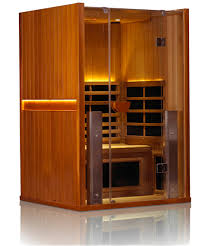
Clearlight Sanctuary
Clearlight is another company I've been following and recommending for many years.
The Sanctuary collection is Clearlight's premium full spectrum lineup, incorporating its True Wave heating technology. These models combine far infrared with full spectrum heaters to provide near, mid and far infrared.
What I've always liked about Clearlight is the company's emphasis on construction, materials and overall sauna quality. They also have very solid warranties.
Like Sunlighten, they have a far infrared only sauna called the Premier, so again if you decide that you don't want to go full spectrum that's an option for you.
My take: The Sanctuary is worth considering if you want full spectrum heating in a well-built premium sauna. I'd compare it closely with the Sunlighten models, particularly when it comes to heater configuration, controls, warranty and price.
Read my Clearlight sauna review to learn more.
If you're considering either manufacturer, I've put together a more detailed Sunlighten vs. Clearlight comparison covering their differences.
Full Spectrum vs. Far Infrared: What's the Real Difference?
So how does a full spectrum sauna actually compare to a conventional far infrared model?
Both use radiant heat to warm your body, but full spectrum models add near and mid infrared wavelengths, sometimes along with more advanced heaters and controls.
| Feature | Far Infrared | Full Spectrum |
|---|---|---|
| Infrared Wavelengths | Primarily far infrared | Near, mid and far infrared |
| Heating Systems | Typically carbon or ceramic heaters | Combination of infrared heater technologies |
| Controls | Usually temperature and session time | May offer separate heater or wavelength controls |
| Price | Available at many price levels | Typically more expensive |
| Overall Health Benefits | Studied in various sauna applications | Not proven to be consistently superior |
That's why I think it's important to look at the entire sauna rather than focusing exclusively on the heating system.
Do Full Spectrum Saunas Have More Health Benefits?
This is one of those areas where you'll find a lot of marketing hype that doesn't necessarily line up with the actual science.
You'll see claims that near infrared is especially beneficial for the skin, mid infrared improves circulation and metabolism, and far infrared penetrates more deeply to promote detoxification.
The problem is that these explanations tend to oversimplify how infrared energy interacts with the body.
Different infrared wavelengths do have different physical properties. But that doesn't mean each one produces a predictable set of unique health benefits when delivered inside a sauna.
There has been research into infrared sauna use for relaxation, circulation, cardiovascular function and certain types of pain. Some findings are encouraging, but the research is still limited, particularly when it comes to comparing full spectrum saunas directly with far infrared models.
There's also research into near infrared light therapy, but those studies often use specialized equipment and controlled doses. We can't automatically assume the same results apply to sitting inside a full spectrum sauna.
And while sweating is a normal response to sauna heat, I would be skeptical of claims that full spectrum technology provides substantially greater detoxification benefits.
Your liver and kidneys are responsible for most of the body's detoxification processes, and there's little good evidence that adding more infrared wavelengths significantly changes that.
I'm not saying the additional technology has no value. I just wouldn't treat claims of superior health benefits as established facts.
Are Full Spectrum Saunas Worth the Extra Money?
In some cases, yes.
But I think it depends on why you're buying a sauna in the first place.
If you're simply looking for a comfortable sauna to relax in a few times a week, there's nothing wrong with a good far infrared model. There are plenty of good options out there.
In fact, I'd take a well-built far infrared sauna from a reputable manufacturer over a cheaply made full spectrum sauna any day.
On the other hand, if you're already considering a premium model, the additional heating technology and controls may be worth having.
Here are the things I'd focus on before making a decision:
- Heater quality: How well does the sauna distribute heat throughout the cabin?
- Construction: What type of wood and materials are used? Does the sauna feel solid and well built?
- Controls: Can you adjust the different heaters, or do they all operate together?
- Comfort: Is there enough room to sit comfortably? Are the heaters positioned properly?
- Electrical requirements: Will it work with your existing electrical setup, or do you need a dedicated circuit?
- Warranty and support: Is the manufacturer established, and will it be there if you need service?
I've looked at hundreds of sauna models over the years, and I can tell you that these practical considerations are often more important than the latest technology being advertised.
A sauna that's uncomfortable, poorly constructed or inconvenient to use isn't going to become a better purchase simply because it offers three infrared wavelengths.
What About Red Light Therapy?
Red light therapy is another feature that's becoming increasingly popular in infrared saunas, and it's worth understanding how it differs from full spectrum heating.
Red light and near infrared are not the same thing. Red light is visible to the human eye, while near infrared is invisible. Both are used in certain light therapy applications, but the specific wavelengths, intensity and duration of exposure can affect the results.
Some full spectrum saunas, including the Sunlighten mPulse, incorporate dedicated red light therapy. Others don't, so you shouldn't assume it's included just because a sauna is advertised as full spectrum.
Personally, I like having the integrated red light feature on my mPulse Conquer. It's convenient, and I don't need a separate device to enjoy it during my sauna sessions.
That said, I consider red light therapy a separate feature rather than an automatic benefit of full spectrum heating.
If you're interested in learning more about how the technology works and which saunas offer it, take a look at my Red Light Therapy Saunas guide.
My Final Thoughts
I like full spectrum infrared saunas, and I've been very happy with my Sunlighten mPulse Conquer. The additional controls and features are nice to have, especially if you're someone who uses your sauna regularly.
But I wouldn't suggest spending significantly more just to get all three infrared wavelengths. There's still not enough evidence to say that full spectrum provides greater overall health benefits than far infrared alone.
If you're considering a premium sauna, I think Sunlighten and Clearlight are both worth a look. Just make sure you're paying for features you'll actually use.
Ultimately, I'd rather have a well-built far infrared sauna than a mediocre full spectrum model.
For more options, take a look at my Best Infrared Saunas guide or Infrared Sauna Brand Comparison.