Home Infrared Saunas – Complete Guide For Homeowners
Home infrared saunas have become one of the most popular ways to enjoy sauna therapy without leaving the house. Compared with traditional Finnish-style saunas, these units operate at lower temperatures and use radiant infrared heat to warm the body directly rather than heating the surrounding air.
Because of this design, infrared saunas are easier to install, cheaper to operate, and often more comfortable for people who find traditional saunas too hot.
This guide serves as the central hub for all infrared sauna information on Sauna Talk, including:
- how infrared saunas work
- potential health benefits
- safety considerations
- heater technology
- low-EMF models
- and the best infrared saunas available today
If you're researching infrared saunas for home use, the resources below will help you understand the technology and choose the right model.
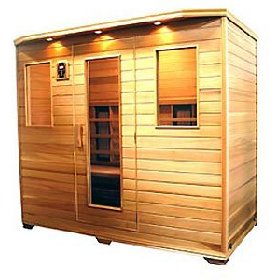
What is a Home Infrared Sauna?
Infrared saunas use far infrared radiation (FIR) to heat the body directly instead of heating the surrounding air.
Far infrared is a type of radiant heat energy that penetrates the skin and warms the body without first heating the air around you. Because of this, infrared saunas operate at significantly lower temperatures than traditional saunas.
Typical temperature ranges include:
- Infrared sauna: 100°F – 130°F
- Traditional sauna: 170°F – 220°F
This lower temperature environment allows many people to tolerate longer sauna sessions while still achieving a deep sweat.
Infrared saunas are also popular because they are easy to install in homes. Many models plug into a standard household outlet and can be placed in spaces such as:
- spare bedrooms
- basements
- home gyms
- garages
- wellness rooms
These factors have made infrared saunas one of the fastest-growing segments of the home sauna market.
SEE OUR TOP 5 INFRARED SAUNA BRANDS COMPARED HERE!
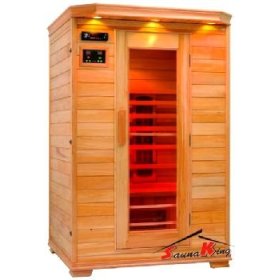
Why Home Infrared Saunas Are So Popular
Several practical advantages explain why so many homeowners choose infrared saunas.
Lower operating temperatures
Because infrared heat warms the body directly, the surrounding air temperature can remain much lower than in traditional saunas. This creates a gentler sauna experience while still promoting sweating. There are also no hot surfaces like you'll find in a traditional sauna.
Faster heat-up time
Infrared saunas typically warm up in 10–15 minutes, compared with 30–45 minutes for many traditional sauna heaters.
Lower electricity use
Infrared heaters generally require much less power than conventional sauna stoves, which can reduce long-term operating costs.
Easy installation
Most home infrared saunas are self-contained units that can be assembled in less than an hour. Many models plug into standard electrical outlets, making installation simple compared with traditional sauna builds.
Compact size
Infrared saunas are commonly available in:
This flexibility allows homeowners to install a sauna even in smaller spaces.
Potential Infrared Sauna Benefits
Many people use infrared saunas for general wellness and relaxation. Regular sauna sessions may support several health and lifestyle benefits.
Reported benefits of infrared sauna use include:
- relaxation and stress reduction
- improved circulation
- muscle recovery after exercise
- relief from joint stiffness
- skin cleansing through sweating
Sweating itself requires metabolic activity. Producing sweat uses energy, meaning calories are burned during the body's temperature-regulation process.
Some sauna users also experience a cardiovascular response during sessions as heart rate increases while the body works to cool itself.
For a deeper look at the science and research, see our full guide to
infrared sauna benefits.
Are Infrared Saunas Safe?
For most healthy adults, infrared saunas are generally safe when used responsibly.
Because they operate at lower temperatures than traditional saunas, many users find infrared heat easier to tolerate while still producing a significant sweat response.
However, safe sauna use still requires a few basic precautions.
Typical guidelines include:
- start with 10–15 minute sessions
- stay well hydrated
- avoid alcohol before sauna use
- gradually increase session length as tolerance improves
Some individuals should consult a doctor before using a sauna, particularly those with certain cardiovascular conditions.
For a detailed safety guide including potential risks and side effects, see
are infrared saunas safe.
Infrared Sauna Heater Types
The heating system is one of the most important components of any infrared sauna.
Instead of using a single heater like traditional saunas, infrared units typically use multiple heating panels placed around the seating area.
These panels emit infrared radiation that warms the body directly.
The two most common heater types are:
Ceramic infrared heaters
Ceramic heaters produce strong, concentrated infrared heat and were widely used in early infrared sauna designs.
Carbon infrared panels
Carbon fiber panels distribute heat more evenly across a larger surface area, creating a more uniform heating environment inside the sauna.
Each heater type has advantages depending on design preferences and comfort.
To learn more about the differences, see our guide to
ceramic vs carbon infrared sauna heaters.
Low EMF Infrared Saunas
Some buyers are concerned about electromagnetic field (EMF) exposure from electrical appliances.
For this reason, many manufacturers now offer low-EMF infrared saunas, designed to minimize electrical emissions near heating elements.
Low-EMF models often include:
- shielded wiring
- improved heater design
- independent EMF testing
When comparing infrared sauna models, it is worth reviewing published EMF measurements and manufacturer testing data if it's available.
To learn more, see our guide to
low-EMF infrared saunas.
Alternative Infrared Options (More Affordable & Portable
Not everyone has the space or budget for a full infrared sauna. If you’re looking for a more affordable or portable option, there are a few alternatives worth considering.
Choosing the Best Infrared Sauna for Your Home
If you are considering purchasing a home infrared sauna, it is important to evaluate both the sauna itself and the company behind it. Build quality, heater design, and manufacturer reputation can all affect long-term performance and reliability.
Quality of construction
A well-built infrared sauna should use durable wood and solid construction techniques. Many home infrared saunas are built using hemlock wood, which is commonly used because it is stable, durable, and affordable. Some higher-end models may use cedar or other premium woods.
Look for saunas with sturdy wall panels, quality door hardware, and well-finished interior surfaces. A well-constructed unit will hold heat efficiently and last longer over years of regular use.
Heater design and placement
Infrared saunas rely on multiple heating panels positioned around the seating area. The placement of these heaters affects how evenly the sauna warms the body.
Quality models typically include heaters behind the back, beside the legs, and sometimes in the floor or front wall. This arrangement helps provide balanced heat distribution during a session.
Low EMF design
As we mentioned above, if you can find infrared saunas with low EMF, that's a step in the right direction. Reputable manufacturers often publish EMF measurements or provide independent testing results on their websites. Speaking of which...
Independent testing and certifications
A trustworthy sauna manufacturer should be transparent about testing and safety standards. It is a good sign when companies provide:
- independent laboratory testing
- electrical safety certifications
- EMF measurement data
- clear product specifications
This type of information helps buyers verify the performance claims made about a sauna.
Company reputation
The reputation of the manufacturer is just as important as the sauna itself. Before purchasing a home infrared sauna, it is worth researching the company to see how they treat customers and stand behind their products.
Things to look for include:
- positive customer reviews
- a strong Better Business Bureau (BBB) rating
- responsive customer support
- clear warranty policies
A reputable company should be transparent about their products and willing to answer questions about construction, heater technology, and safety testing.
Comparing different models
Because there are many brands and models available, comparing several options can help you make a more informed decision.
For detailed product comparisons and recommendations, see our guide to the best infrared saunas for home use. You can also read our full collection of infrared sauna reviews to compare specific brands and models.
Infrared Sauna Reviews
Choosing the right infrared sauna can be challenging because there are many manufacturers and models available, often with similar claims about performance, safety, and health benefits.
To help buyers make informed decisions, we publish detailed infrared sauna reviews that evaluate many of the most popular sauna brands and models currently on the market.
Our goal is to go beyond marketing claims and provide a clearer picture of how different infrared saunas compare in real-world use.
Evaluating the top sauna companies
When reviewing infrared saunas, we start by looking at the company behind the product. A sauna is a long-term investment, and the reputation of the manufacturer can be just as important as the sauna itself.
We evaluate factors such as:
- how long the company has been in business
- overall customer satisfaction and feedback
- Better Business Bureau ratings and complaint history
- warranty policies and return procedures
- responsiveness of customer service
A reputable sauna company should be transparent about its products, provide clear specifications, and stand behind its equipment with solid warranty coverage. Strong warranties are often a sign that the manufacturer has confidence in the durability of their saunas.
Breaking down each sauna model
Beyond the company itself, our reviews take a closer look at the design and performance of individual sauna models.
Key factors we examine include:
- heater type and heat distribution
- construction quality and materials
- EMF levels and wiring design
- overall comfort and usability
- available features and controls
We also look at the type of heating technology used, whether the sauna uses ceramic or carbon heating panels, and how evenly heat is distributed throughout the unit.
Testing and independent data
Whenever possible, we review manufacturer documentation and independent testing results related to:
- EMF levels
- electrical safety certifications
- air quality and material safety
- laboratory testing data
Independent testing can provide useful verification of manufacturer claims and help buyers compare products more objectively.
Real-world experience
When the opportunity is available, we also test infrared saunas ourselves to evaluate factors that specifications alone cannot show.
Hands-on testing allows us to assess things like:
- heat distribution and comfort
- warm-up time
- interior layout and seating
- build quality and overall user experience
These real-world observations help give readers a better sense of what it is actually like to use a particular sauna model.
Comparing the best infrared saunas
Because there are many brands available, our reviews often compare several leading companies side by side. This makes it easier to see how different models stack up in terms of performance, build quality, features, and overall value.
If you're researching specific models or comparing different manufacturers, visit our complete collection of infrared sauna reviews where we break down the strengths and weaknesses of many of the top infrared sauna brands.
Infrared Sauna FAQs
Many first-time sauna users have similar questions when researching infrared saunas.
Common questions include:
How often should you use an infrared sauna?
Most people begin with 2–3 sessions per week and adjust frequency depending on personal comfort and wellness goals.
How long should a sauna session last?
Many users start with 10–15 minutes and gradually increase session length to around 30–45 minutes.
Do infrared saunas help with weight loss?
Sweating requires metabolic energy, which means calories are burned during sauna sessions. However, infrared saunas should not be viewed as a replacement for exercise or a primary weight-loss strategy.
For more detailed answers, see our complete guide to
infrared sauna FAQs.
Using Infrared Saunas at Home
Home infrared saunas provide a convenient way to enjoy sauna sessions without visiting a spa or gym.
With relatively simple installation, lower operating temperatures, and a wide range of available models, infrared saunas have become a popular wellness feature in many homes.
If you are considering adding one to your home, exploring the guides and reviews above will help you understand the technology and choose the best infrared sauna for your needs. And if you have any questions or need help choosing one for your home, please feel free to each out!